Do you trust ‘The Process’?
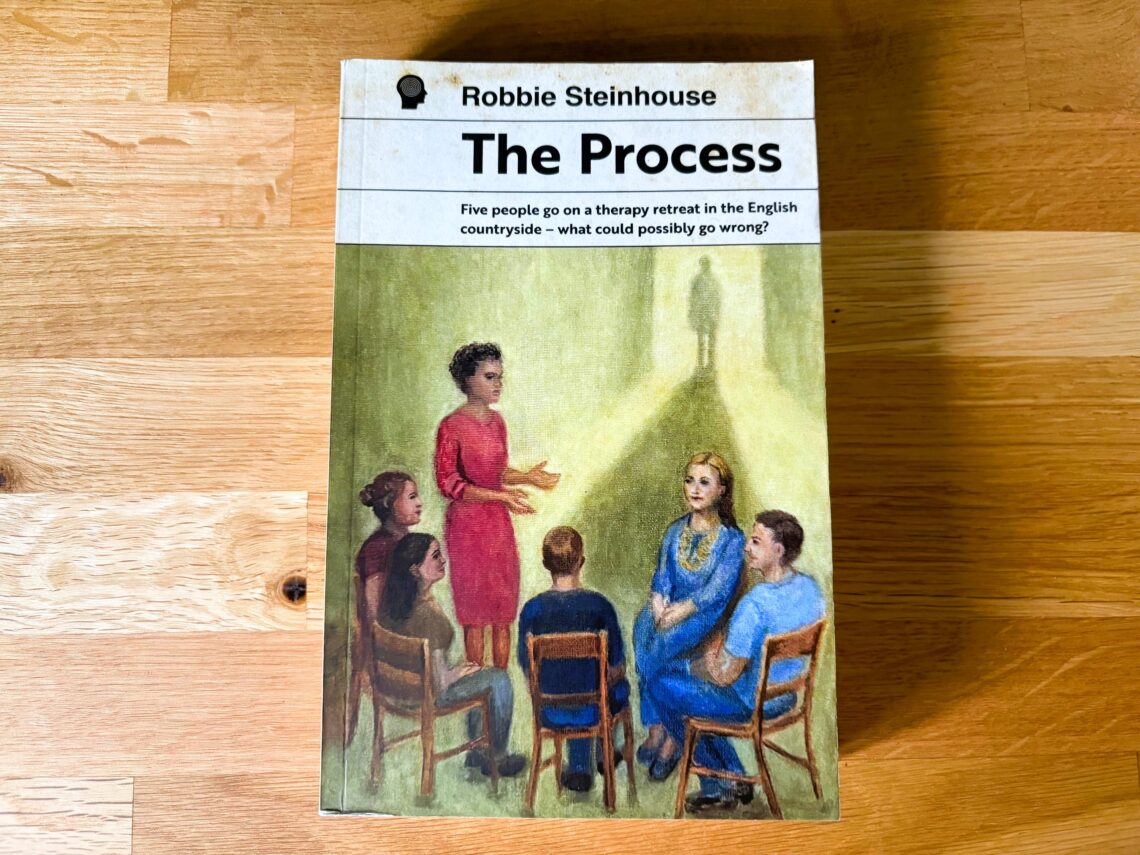
Review of The Process by Robbie Steinhouse (2025, 296 pages)
If you’re intrigued by the world of therapy, or have ever wondered what really happens inside the swanky retreats featured in glossy wellbeing magazines, this might well be the book for you!
The Process is the debut novel by NLP Master Trainer and ICF-certified coach Robbie Steinhouse. Although this is his first work of fiction, he is no stranger to writing. Steinhouse has previously authored several non-fiction titles, including How to Coach with NLP, Think Like an Entrepreneur, and Mindful Business Leadership. His professional background, and experience in leading workshops, clearly inform the novel and add a sense of authenticity.
Disclosure: I received a complimentary copy of The Process from Cameron Publicity & Marketing. I am reviewing the book voluntarily.
Setting and Premise
Set in a large country house in North Devon, the story follows five emotionally burdened participants – David, Lola, Nathan, Sujitha, and Sheila – who attend an intensive therapeutic retreat known as ‘the Process’. The programme is led by Louise, an accomplished and highly perceptive therapist, whose keen intuition ensures little goes unnoticed. The group also receive the occasional visit from the retreat’s enigmatic and entrepreneurial founder, Jacob, a man who has battled with his own demons.
Jacob’s own ‘process’ is gradually revealed as the narrative shifts between the shadows of his past and the unfolding events at the retreat, adding both depth and context to the therapeutic activities the participants are asked to undertake.
A Novel with a Therapeutic Element
As Steinhouse’s extensive knowledge of therapy is woven into the narrative through the delivery of the therapy sessions, the book often reads as both a novel and a therapeutic guide. During Louise’s sessions, readers are introduced to key therapeutic concepts, such as Life Scripts from the field of Transactional Analysis. These explanations encourage self-reflection and make the text particularly thought-provoking in places. As a reader, you begin to think alongside the characters, asking yourself:
- Which fairytale archetype best represents me?
- What limiting beliefs have I absorbed during my childhood?
To a certain extent, you are not merely observing the Process; you are invited to participate in it.
Themes: Identity, Mortality, and Transformation
Each participant arrives at the retreat carrying their own emotional baggage, hoping to finally set it down, address the patterns of behaviour that have held them back, and create a better future for themselves. As they share the experiences that have led them to the retreat, we watch them confront their past and wrestle with profound questions about their mortality.
One particularly powerful moment comes in the classic ‘end of life’ exercise, where the participants imagine they have only a limited time left to live. In doing so, the novel invites readers to reflect on their own legacies and what truly matters to them:
‘On the Process, we like the idea that our immortality is created by what we leave behind… What are the “ripples in the pond” that you want to leave behind? How do you want to be remembered? We strongly invite you to consider these ideas.’
(The Process by Robbie Steinhouse, p.104)
Equally compelling is the exploration of the ‘masks’ we wear. Over the course of the retreat, the characters are encouraged to shed these masks and discover who they really are beneath the surface. What’s striking is how quickly they slip back into old habits after the therapy sessions or when under pressure: gossiping, flirting, over-sharing, or withdrawing altogether. These moments show just how deeply ingrained our coping mechanisms can be. However, through personal reflection and the various therapeutic exercises, the participants finally learn to break free from their past patterns and embrace a new way of being.
Trust the Process… or Question It?
A central tension in the novel lies in the idea of trusting the therapeutic process. Early on, a few cynics in the group question the activities, prompting Louise to remind them to ‘trust the process’. As the sessions progress, and they begin to witness one another’s transformations, the participants gradually let go of their reservations and begin to do exactly that. Reading these moments also prompted me to reflect on how much I personally ‘trust the process’. Some of the exercises, particularly those involving trance-like states and the seemingly psychic connections between the participants, certainly brought out the cynic in me, and I found myself imagining how uncomfortable I might feel completing them in a group setting.
This raised broader questions about whether a therapeutic method can truly be condensed into a one-size-fits-all package. Can the complexity of human experience and healing really be reduced to a single, standardised ‘process’? The programme’s founder appears to believe it can. Louise, too, adopts a notably dogmatic stance, leaving little room for deviation or digression from the prescribed steps.
Pacing and Final Impressions
The Process is a book you can sail through, thanks to its short yet punchy chapters. As the story progresses, the tension builds both inside and outside of the therapy sessions, culminating in some page-turning, jaw-dropping moments as the mystery behind the Process begins to unravel and an intriguing twist is revealed.
Ultimately, this is a novel that operates on two levels: as a piece of fiction and as an invitation to examine your own beliefs and assumptions. Whether you’re persuaded by the philosophy behind the Process or remain sceptical, it keeps you thinking long after you’ve turned the final page!